
Prescribing information is available here. Adverse Event reporting can be found in the footer.

NICE guideline updated1 Recommended in the 2025 KDIGO Guidelines2
Kinpeygo® is indicated for the treatment of adults with primary IgA nephropathy with a urine protein excretion ≥ 1.0 g/day (or UPCR ≥ 0.8 g/g, equivalent to ≥ 90 mg/mmol).1,3
Jump to: Latest News | IgA Nephropathy | Kinpeygo® | Phase III trial | Guidelines | Resources
NEW SMC ADVICE4
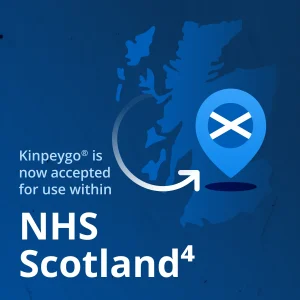
NEW Scottish Medicines Consortium advice: SMC2814
NeW Webinars

NEW Webinars available on-demand
We are pleased to announce that two new webinars are available on-demand on our webinar platform.
Kinpeygo® is accepted for use within NHS Scotland for the treatment of adults with primary immunoglobulin A nephropathy (IgAN) with a urine protein excretion ≥1.0 g/day (or urine protein-to-creatinine ratio ≥0.8 g/g, equivalent to ≥90 mg/mmol).4
Rethinking IgA Nephropathy: Early Disease-Modifying Therapy and the Priority of eGFR Stabilisation. Presented at UK Kidney Week 2026 by Prof. Jonathan Barratt, Prof. Smeeta Sinha and Dr. Chee Kay Cheung.
Optimising IgAN Care: A Renal Pharmacist Best Practice Exchange. Presented on World IgA Awareness Day 2026 by our panel of expert Renal Pharmacists.
NICE recommends Kinpeygo® as an option in adults with UPCR ≥ 90 mg/mmol or protein excretion of ≥ 1.0 g/day, to preserve kidney function and prevent nephron loss1
NICE and KDIGO recommend disease-modifying Kinpeygo® for the treatment of IgA nephropathy alongside optimised standard care1,2

IgA nephropathy: A major cause of CKD and kidney failure5
Rare kidney diseases account for <5-10% of patients with chronic kidney disease (CKD) but >30% of patients with kidney failure. Glomerulonephritis attributes to ~20% of patients on renal replacement therapy in the UK.6
UK RaDaR data shows that 50% of IgA nephropathy patients will reach kidney failure or death within 10-15 years.5
A disease of the kidney caused by pathogenic IgA production in the gut7-9
IgA nephropathy is characterised by the deposition of galactose-deficient IgA1 (gd-IgA1) antibody complexes in the glomerular mesangium, leading to irreversible glomerularsclerosis and loss of kidney function.10
Kinpeygo® is the only disease-modifying treatment specifically licensed for use in IgA nephropathy3
Kinpeygo® is designed to deliver budesonide topically in the ileum3 treating the underlying cause of IgA nephropathy, potentially delaying progression to dialysis or kidney transplant1,11
Unlike other budesonide formulations, Kinpeygo® targets the Peyer’s patch-rich distal ileum to minimise disease progression and damage to kidneys10,11


Posology and Administration3
 |
Once daily for 9 months |
 |
16 mg/day (4 capsules) |
 |
Capsules should be swallowed whole with water in the morning, at least 1 hour before a meal |
 |
Patient should not double daily dose to make up for a missed dose |
 |
28 capsule pack available to support dose tapering after 9 months of full treatment |
For full details on posology, administration, contraindications and treatment discontinuation protocols, read the Summary of Product Characteristics (SmPC).
Durable kidney function preserved beyond treatment
The NefIgArd Phase III trial: 2-year results of Kinpeygo vs placebo in IgA nephropathy patients12
Sustained, clinically meaningful impact in eGFR12
Mean absolute change in eGFR from baseline to 24 months (primary endpoint)

Adapted from Lafayette, et al, 2023.12
- Kinpeygo showed a +5.05 mL/min/1.73 m² time-weighted average eGFR benefit vs. placebo over 2 years (95% CI, 3.24–7.38, p<0.0001).
- After 2-years, Kinpeygo reduced the decline in kidney function by ~50% vs placebo (-6.11 mL/min vs -12.00 mL/min).
- A 55% risk reduction in reaching 30% reduction in eGFR or kidney failure (HR 0.45; 95% CI, 0.26–0.75, p=0.0014), exceeding thresholds predictive of long-term renal survival
Robust and sustained reduction in proteinuria12
Mean percentage change in UPCR (g/g) from baseline to 24 months (secondary endpoint)

Adapted from Lafayette, et al, 2023.12
*Percentage change vs placebo in UPCR at 9 months: 30,0% (95% CI, 19.9–38.8) and at 24 months: 30.1% (95% CI, 16.4–41.5).
- Kinpeygo achieved a 40.3% reduction in UPCR from baseline over 2-years, vs 1.0% increase with placebo (p<0.0001).13
- A maximal ~50% reduction vs placebo was observed at 1-year confirming a strong and early therapeutic effect (95% CI, 41.6–56.6).
- The ~30% reduction in proteinuria seen at end of treatment (9 months) was maintained through 2-years.*
Kinpeygo® has a predictable and tolerable safety profile12
Well-Tolerated and Locally Acting
Kinpeygo demonstrated a favourable safety profile, consistent with its design as a locally acting oral budesonide, minimising systemic steroid exposure.
Mostly Mild and Reversible Side Effects†
The most common TEAEs, such as peripheral oedema (17%), hypertension (12%), and acne (11%), were generally mild, non-serious, and resolved during or after treatment.
Low Discontinuation and sAE Rates
9% of patients discontinued due to AEs vs 2% with placebo; sAEs were rare and mostly unrelated to treatment, with no consistent pattern across organ systems.
AE, adverse event; CI, confidence interval; CKD, chronic kidney disease; DEARA, dual endothelin angiotensin-receptor antagonist; eGFR, estimated glomerular filtration rate; gd, galactose-deficient; HR, hazard ratio; IC, immune complex; IgA, immunoglobulin A; KDIGO, Kidney Disease: Improving Global Outcomes; RaDaR, National Registry of Rare Kidney Diseases; RASi, renin-angiotensin system inhibitor; sAE, serious adverse event; SD, standard deviation; SGLT2i, sodium-glucose transport protein-2 inhibitor; SMC, Scottish Medicines Consortium; TEAE, treatment-emergent adverse event; UPCR, urine protein-creatinine ratio.
†Summary of TEAEs during treatment period (≥5% in the Kinpeygo arm).
NICE guideline update1
NICE released new guidelines for the treatment of primary IgA nephropathy1
Kinpeygo® is an option to treat primary IgA nephropathy in adults when:
- they have:
- a urine protein-to-creatinine ratio (UPCR) of 90 mg/mmol or more or
- a protein excretion of 1.0 g/day or more, and
- it is used as an add-on to optimised standard care that includes, unless contraindicated:
- the highest tolerated licensed dose of renin-angiotensin system inhibitors (RASi) or
- a dual endothelin angiotensin-receptor antagonist (DEARA)
2025 KDIGO Guidelines2
KDIGO recommends disease-modifying treatment alongside traditional RASi and SGLT2i2
KDIGO recommends that the focus of management in most patients should be to simultaneously:
- Prevent or reduce immunoglobulin A–containing immune complex (IgA-IC) formation and IgA-IC– mediated glomerular injury.
- Manage the consequences of existing IgAN-induced nephron loss (likely lifelong).
A comprehensive treatment strategy for IgA nephropathy includes both disease-specific approaches, such as targeting the source of pathogenic IgA production (e.g. Kinpeygo®), and supportive CKD therapies, such as RAAS inhibitors and SGLT2 inhibitors, which help manage blood pressure and proteinuria.
SMC Advice4
SMC advice for Kinpeygo® use in NHS Scotland4
Kinpeygo® is accepted for use within NHS Scotland for the treatment of adults with primary IgAN with a urine protein excretion ≥1.0 g/day (or urine protein-to-creatinine ratio ≥0.8 g/g, equivalent to ≥90 mg/mmol).
In a phase III study of patients with primary IgAN with a urine protein excretion ≥1.0 g/day (urine protein-to-creatinine ratio ≥ 0.8 g/g [equivalent to ≥ 90 mg/mmol]) and on RAS inhibition, budesonide modified release treatment was associated with a statistically significant reduction in the decline of eGFR over 2 years compared with placebo.
This advice applies only in the context of an approved NHS Scotland Patient Access Scheme (PAS) arrangement delivering the cost-effectiveness results upon which the decision was based, or a PAS/ list price that is equivalent or lower.
Patient insight | Nov 2023
Patient experts help gain NICE approval for new IgA nephropathy treatment
Ben Stokes, 35 from Maidenhead, was part of an expert panel of patients who shared their insight with decision makers on the life-changing impact that budesonide could have for people living with IgA nephropathy.
In an article on Kidney Research UK, Ben said, “I wish this medication had been available 10 years ago and then I might not be in the position that I’m in now. Somebody that might have taken ten years like me to get to end stage kidney function could take 20 or 30 years, or not ever get there”.
Find out more about Kinpeygo®
Request a visit from our Medical Science Liaison Team or Healthcare Partnership Manager Team
How to order Kinpeygo®
Order via Phoenix or HealthNet Homecare for delivery to your Trust or direct to your patient
Clinical Resource:

Kinpeygo®

Kinpeygo®
Clinical Summary

Educational Webinars
Treating immunoglobulin A
nephropathy (IgAN):
a guide
Article: Treatment of immunoglobulin A nephropathy with targeted-release budesonide
Kinpeygo® Patient Support Leaflet

Understanding IgA Nephropathy Leaflet

Visit the Kinpeygo® Patient Website

Let’s stay connected!
Want to be the first to hear about the products, services and educational resources we offer, including invitations to webinars and events?
References
1. NICE. Technology appraisal guidance TA1128: Targeted-release budesonide for treating primary IgA nephropathy. Last accessed: May 2026; 2. KDIGO. Clinical Practice Guideline for the Management of IgA Nephropathy (IgAN) and IgA Vasculitis (IgAV). Last accessed: May 2026; 3. Kinpeygo® SmPC. Last accessed: May 2026; 4. SMC. Medicines advice: budesonide modified release (Kinpeygo). Last accessed: May 2026. 5. Pitcher D, et al. Clin J Am Soc Nephrol. 2023;18(6):727–38; 6. UK Kidney Association. UK Renal Registry Annual Report (2021). Last accessed: April 2026; 7. Zhang Y-M, Zhang H. Clin J Am Soc Nephrol. 2018;13(10):1584–6; 8. Barratt J, et al. Front Med (Lausanne). 2024;11:1461879; 9. Suzuki H, et al. J Am Soc Nephrol. 2011;22(10):1795-803; 10. Barratt J, et al. Drug Des Devel Ther. 2024;18:3415–28; 11. Fellström BC, et al. Lancet. 2017; 389(10084):2117-27; 12. Lafayette R, et al. Lancet. 2023;402(10405):859-70; 13. Lafayette R, et al. Lancet. 2023;402(10405):859-70. Suppl. Appendix.
Information
For information on our products please visit EMC, https://www.medicines.org.uk/emc/ and search the product for a Summary of Product Characteristics
Adverse events should be reported. Reporting forms and information can be found at https://yellowcard.mhra.gov.uk or search for MHRA Yellow Card in the Google Play or Apple App Store. Adverse events should also be reported to Thornton and Ross Limited by emailing thorntonross@medinformation.co.uk or by calling 01484 848164.
UK-MULT-122e(10) | May 2026